
A small lantern for changing times

Doorway Two · Living Guide 02

Thriving in These Times

A calm companion for becoming rooted, clear, kind and capable while the world changes around us.

Not a fear manual. A gentle, practical path through nervous-system care, breath, sleep, food, water, community, conscious preparedness and hope that has hands.

  • About 24 minutes
  • Practice-led
  • Free forever
A glowing hand-drawn lantern held within olive leaves, eucalyptus, fern and wildflowers
Find the next kind, capable step.
Calm before urgencyCare before perfectionRelationship before isolationOne step at a time

A little breath before we begin

You do not have to carry the whole world at once.

When the future feels uncertain, our first task is not to know everything. It is to become present enough to meet what is here.

We made this companion for the moments when the news is loud, the heart is tender and the list of what might need changing feels impossibly long. It begins close to home: one breath, one nourishing meal, one honest conversation, one useful skill, one patch of living soil.

Preparedness can be loving rather than fearful. Resilience can be soft as well as strong. Thriving does not mean never struggling; it means growing the inner and outer relationships that help us respond, recover and keep caring.

Read slowly. Skip freely. Let one page become one living action, then close the screen and return to your life.

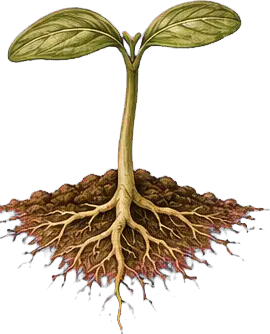
A hand-drawn seed beginning to root

Chapter one · Come home

Begin with yourself

Before solving the future, meet the person who is here now.

Uncertainty can pull attention into imagined tomorrows. The body tightens, the mind races, and everything begins to feel equally urgent. A pause is not denial. It is how we recover enough choice to respond wisely.

Start with what is directly true: the support beneath you, the temperature of the air, the sound furthest away, the next breath leaving your body. Let your horizon become this hour. Ask what would make the next hour kinder and more workable.

One living action

Put both feet on the ground. Exhale slowly three times. Name one thing that needs care today and one thing that can wait.

Reflect: What helps you feel most like yourself again?

A rooted hand-drawn seedling

Chapter two · Remember the web

Regenerative interbeing

Your wellbeing has never been yours alone.

We are shaped by soil, water, food, sunlight, breath, culture, place and relationship. When we care for ourselves, we become more capable of caring for others. When we protect land and water, the living world nourishes us in return.

Regenerative interbeing is the practice of living as a participant in this web. It replaces the lonely question “How do I survive?” with the more fertile question “How can we help life flourish together?” The answer might be a garden, a shared meal, a repaired friendship, a protected spring or the courage to ask for help.

One living action

Choose one ordinary thing - a glass of water, a meal or a shirt - and trace five relationships that brought it to you.

Reflect: Where are you already held by life?

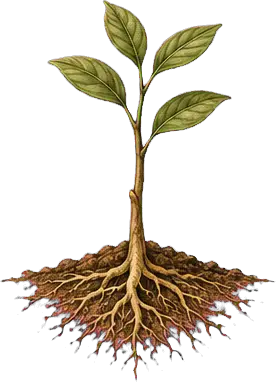
A hand-drawn young plant with strengthening roots

Chapter three · Find the ground

Begin with your nervous system

A steadier body gives wise action somewhere to begin.

Stress responses are not personal failures. They are protective patterns. When activation stays high, the mind may scan for danger, sleep may become difficult and small decisions may feel enormous. We can offer the body signals of present safety without pretending that every circumstance is safe or simple.

  • Orient. Slowly look around and let your eyes rest on colours, shapes and signs of life.
  • Feel support. Notice where the chair, ground or wall is holding your weight.
  • Release. Unclench your jaw, lower your shoulders and lengthen one exhale.
  • Connect. If it feels supportive, hear a trusted voice or sit near someone calm.

Please be gentle: These practices are educational and cannot replace trauma-informed or medical care. If grounding increases distress, stop, choose a familiar support and seek qualified help when needed.

One living action

Try the 5-4-3-2-1 practice: notice five things you see, four you feel, three you hear, two you smell and one you appreciate.

Reflect: Which simple signal tells your body, “I am here now”?

A hand-drawn growing plant

Chapter four · Make room

Breath as a doorway

You do not need a heroic breathing practice. Begin with a comfortable breath.

Let the inhale arrive without pulling. Allow the exhale to become slightly slower, as if softly fogging a mirror with your mouth closed. If counting feels pleasant, try inhaling for four and exhaling for five or six. Continue for one to three minutes and remain within ease.

A humming exhale, a sigh or quietly singing can also help breath become less mechanical and more human. The aim is not to force calm. It is to offer the body a little more space.

Breath safety: Stop if you feel dizzy, numb, panicked or unwell. Avoid intense breath holds or rapid breathing when pregnant, driving, in water, at height, or if you have relevant heart, blood-pressure, seizure, respiratory or mental-health concerns. Seek qualified individual guidance.

One living action

Place a hand on your heart or belly. Take six easy breaths with an exhale just a little longer than the inhale.

Reflect: What changes when breath becomes companionship rather than performance?

Hand-drawn herbs and wildflowers framing the chapter

Chapter five · Nourish the roots

Food and living resilience

Food security begins before a crisis and closer than a warehouse.

Start with foundations: regular meals you digest well, varied whole foods, enough protein and fibre for your needs, and a small buffer of staples you already know how to cook. Then grow relationship around the food: know a farmer, join a seed exchange, learn what grows in your climate, preserve a seasonal surplus, or plant one perennial.

Gardens become more resilient when soil stays covered, roots remain living, water is welcomed into the ground and diversity replaces rows of vulnerability. Potatoes, beans, pumpkins, greens, herbs, climate-suited fruit and nut trees, and perennial vegetables can all play a part - but the right design begins with place.

One living action

Choose one staple you already eat. Add enough for a few extra meals, label the date and begin a calm, rotating pantry rather than an emergency hoard.

Reflect: Which food skill would make your household more capable and more connected?

Hand-drawn olive leaves and quiet wildflowers

Chapter six · Let night restore you

Sleep is preparation

Rest is not time stolen from the work. It is part of the work.

Support sleep with regularity before perfection: a broadly consistent waking time, daylight in the morning, movement during the day, a darker and cooler sleeping space, and a gentle transition away from work and stimulating media. Keep the phone a little farther away if you can. Let the last moments of the day belong to your body again.

If sleep problems persist, become severe or arrive with breathing pauses, major mood changes or dangerous fatigue, seek professional support. A beautiful bedtime ritual is helpful; it is not a substitute for needed care.

One living action

Choose a “lights softer” time tonight. Dim one room, put the phone out of reach and do one quiet thing for ten minutes.

Reflect: What would make your evenings feel more like a landing than a collapse?

Hand-drawn leaves unfurling beside the chapter

Chapter seven · Follow the flow

Water is life and relationship

Resilience grows when we know where our water comes from, how it moves and what happens when the usual system pauses.

At home, keep a sensible amount of safe drinking water suited to your household, climate and local guidance. Know how to shut off the mains, where leaks are likely and which filtration or treatment methods are appropriate for your actual water source.

On land, water design begins with observation and responsibility. Read contours, soils, catchments, overflow paths, fire risk and legal requirements before moving earth. Thoughtfully placed earthworks, plants, mulch and protected soil can slow, spread and sink rain, recharge the landscape and support aquifer resilience - but poor placement can cause damage. Seek site-specific design where stakes are high.

One living action

Trace your household water from source to tap to drain. Write down one backup and one place where water could be conserved.

Reflect: How would your choices change if water were treated as a guest rather than a product?

A hand-drawn young tree becoming strong

Chapter eight · Let energy move

Movement for aliveness

The body does not need punishment. It needs circulation, strength, mobility, play and enough challenge to remember what it can do.

Walking, carrying, gardening, dancing, stretching, swimming, climbing stairs and practising balance are all valid forms of movement. Begin from your actual capacity. Small, frequent movement often belongs more easily to life than an ideal routine that never happens.

Let movement reconnect you to place: walk the edge of your neighbourhood, learn the slope of the land, visit someone on foot or work in a garden beside others.

One living action

Move for five minutes in a way that feels friendly: walk, shake, stretch, dance or tend one small garden task.

Reflect: Which movement leaves you feeling more alive, not merely more accomplished?

A mature hand-drawn Tree of Life

Chapter nine · Return to the older rhythm

Nature and rest

There are rhythms older than urgency.

Sit beneath a tree. Watch birds. Touch soil. Listen to rain without turning it into information. Garden for ten minutes. Walk sometimes without headphones. Let attention widen beyond the small bright rectangle.

Nature connection is not a luxury reserved for wild landscapes. It can begin with sky through a window, a street tree, a balcony herb, the movement of clouds or the honest life of compost. Rest belongs here too. Forests have seasons; fields lie fallow; bodies require recovery.

One living action

Spend ten screen-free minutes with one living being or natural element. Do not improve it. Simply notice.

Reflect: Where does your attention soften without asking permission?

Hand-drawn hands holding a living tree

Chapter ten · We are not alone

Community is resilience

The most important infrastructure may be relationship.

Know a neighbour. Share a meal. Exchange seeds. Learn who has tools, transport, medical knowledge, growing experience or simply the gift of staying calm. Offer what you can without trying to become indispensable.

Healthy community is not forced closeness. It includes consent, boundaries, repair, listening and room for difference. Begin with small circles of trust and practical care. A message before crisis can become a bridge during it.

One living action

Send one message: “I am strengthening our local circle. Is there a skill, seed, tool or cup of tea you would like to share?”

Reflect: What can you offer easily, and what support is difficult for you to receive?

Hand-drawn leaves surrounding a small heart

Chapter eleven · Love made practical

Conscious preparedness

Preparedness is not a performance of fear. It is care that has remembered tomorrow.

Begin with the disruptions most realistic for your place: heat, cold, fire, storm, power loss, water interruption, illness, transport delays or temporary isolation. Follow local emergency guidance and adapt for children, elders, animals, disabilities, medicines and climate.

Home basics

Water, foods you already eat, first-aid basics, lighting, batteries or safe power, warmth or cooling, hygiene supplies, essential medicines and copies of key information.

Local knowledge

Evacuation routes, local hazards, emergency contacts, water sources, neighbours who may need help, and the plans of your household.

Useful skills

First aid, cooking from staples, safe water treatment, simple repair, growing food, fire awareness, navigation, communication and emotional steadiness.

Gentler technology

Back up key data, keep devices charged when risk is high, use airplane mode or distance when practical, and create screen-free spaces for sleep and attention.

For EMF concerns, begin with low-cost choices: distance, fewer unnecessary wireless devices, wired connections when convenient and not sleeping with a phone beside your head. Evidence and guidance continue to evolve; avoid alarming claims and products promising guaranteed protection. Shielding can sometimes change exposure patterns, so specialist measurement is wiser than guesswork.

One living action

Choose one likely local disruption. Write a one-page plan with people, supplies, communication and a calm first step.

Reflect: Which preparation would give your household the most genuine ease?

A small glowing lantern within botanicals

Chapter twelve · Make it liveable

A rhythm for ordinary days

A resilient life is built mostly when nothing dramatic is happening.

Create a rhythm simple enough to return to after disruption. This is not another schedule to perfect. It is a handful of anchors that remind body, home and community how to come back.

MorningLight, water, one conscious breath and a clear next action.
MiddayReal food, a little movement and contact with the living world.
EveningSoften light, reduce input, notice what is complete and prepare one thing for tomorrow.
WeeklyTend supplies, soil, relationships, finances, rest and one useful skill.

One living action

Choose one morning anchor and one evening anchor. Practise them for seven days with more kindness than ambition.

Reflect: Which tiny rhythm keeps the lantern lit?

Chapter thirteen · Keep becoming

Hope in action

Hope becomes trustworthy when it participates.

It is not certainty that everything will unfold as we wish. It is the decision to keep feeding life without needing a guarantee. Hope is a covered patch of soil, a repaired roof, a shared meal, a boundary spoken with love, a child learning where water comes from, a tired person choosing rest.

We are the architects of the future, and we are the ones we have been waiting for - not as isolated heroes, but as one circle of life, learning to lead and listen together. New Earth is not somewhere else. It is embodied imperfectly, through passionate devotion, practical care, joyful creation, faith, discernment and rest when rest is needed.

One living action

Complete this sentence: “In the next seven days, I will help life flourish by...” Choose something visible, possible and shared if you can.

Reflect: What is yours to do - and what becomes possible when you do it with others?

Benjy and Sofia together in a flourishing food forest
Benjy & Sofia · learning, growing and sharing in service to life

A note from us

We are learning beside you.

These pages grew from years of gardens, retreats, circles, teachers, tears, laughter, mistakes, deep remembering and practical work across continents. They do not contain every answer. They carry some of the questions and practices that helped us return to life.

May you use them with discernment. May your version be beautifully your own. May what steadies you become care for the people, places and beings around you.

With so much love, Benjy & Sofia ♡

Learn gently, verify carefully

Health and safety notes

This companion offers general education, not personalised medical, mental-health, nutrition, emergency or land-engineering advice. Bodies, climates and risks differ. Use qualified care and local guidance whenever the stakes are significant.

Trusted starting places
A glowing lantern held within hand-drawn botanicals

Keep the lantern travelling

Take what nourishes you. Pass it on.

This guide is free so it can reach whoever needs a softer doorway into resilience. If it supports you, share it, join the circle or gift back so more living resources can grow.

A living invitation

One steady breath. Seven mornings.

Resilience is not built in a crisis. It is practised quietly, before you need it.

  1. Choose one morning anchor: three slow breaths before reaching for your phone.
  2. Step outside for two minutes, whatever the weather, and let your eyes rest on something living.
  3. Notice what shifts — in your shoulders, your patience, your appetite for the day.
  4. Write one honest line each evening. Seven lines is a record of a nervous system settling.

If you feel like sharing what those seven mornings gave you, the circle is a gentle place to put it.

Slow is allowed. Missing days is allowed. Beginning again is the practice.