The foundational Living Guide
Read Awakening Regeneration online or take the free PDF with you. Begin with soil, water, interbeing and one living action.
Read the guide →Welcome home, fellow gardener
Doorway One · Living Guide 01
The guide we wish someone had given us before we planted our first garden.
A heart-centred beginning into regenerative interbeing, living soil, syntropic thinking, food forests, water wisdom and practical ways to help life flourish - within us and around us.

A gentle path into the library
Read Awakening Regeneration online or take the free PDF with you. Begin with soil, water, interbeing and one living action.
Read the guide →A free, practical PDF for observing your place and choosing first steps. We are shaping it from the questions people bring to the land.
A welcoming conversation to see the principles in practice, ask questions and begin learning together.
The guide is ready to explore. We will share the workbook and video when they are complete through the community updates.
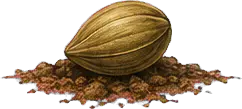
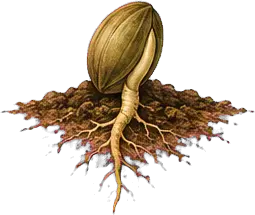
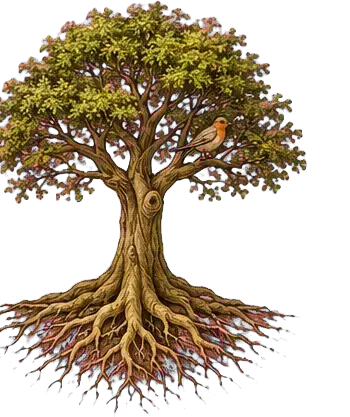
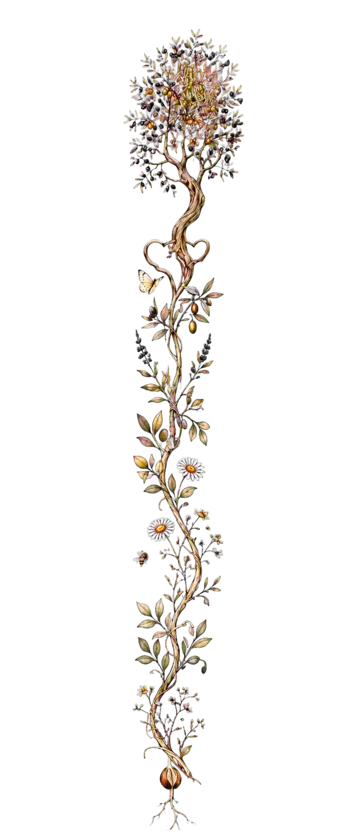
The seed-to-tree journey — six stages this guide walks with you
A small letter before we begin
Regeneration begins wherever care becomes relationship.
You do not need a farm, a perfect plan or endless energy. You can begin with a balcony pot, a bare patch of soil, a bowl for compost, a conversation with a neighbour or ten quiet minutes beneath a tree.
We created this companion to gather the foundations we wish we had understood earlier: that soil is alive, water wants to slow and sink, diversity creates resilience, and our own wellbeing belongs inside the circle of care.
Take what nourishes you. Question what asks to be questioned. Let one paragraph become one living action.
Before the first intervention · Read relationships
A home, kitchen garden, orchard, woodland, paths and wild habitat all affect one another. Permaculture zones help us notice how often a place needs our care and place everyday activities close to where life already happens.
The zones are not fixed rings. Climate, slope, water, soil, access, fire exposure and the way people actually live shape every design. Begin by observing the whole, then choose the smallest useful action.
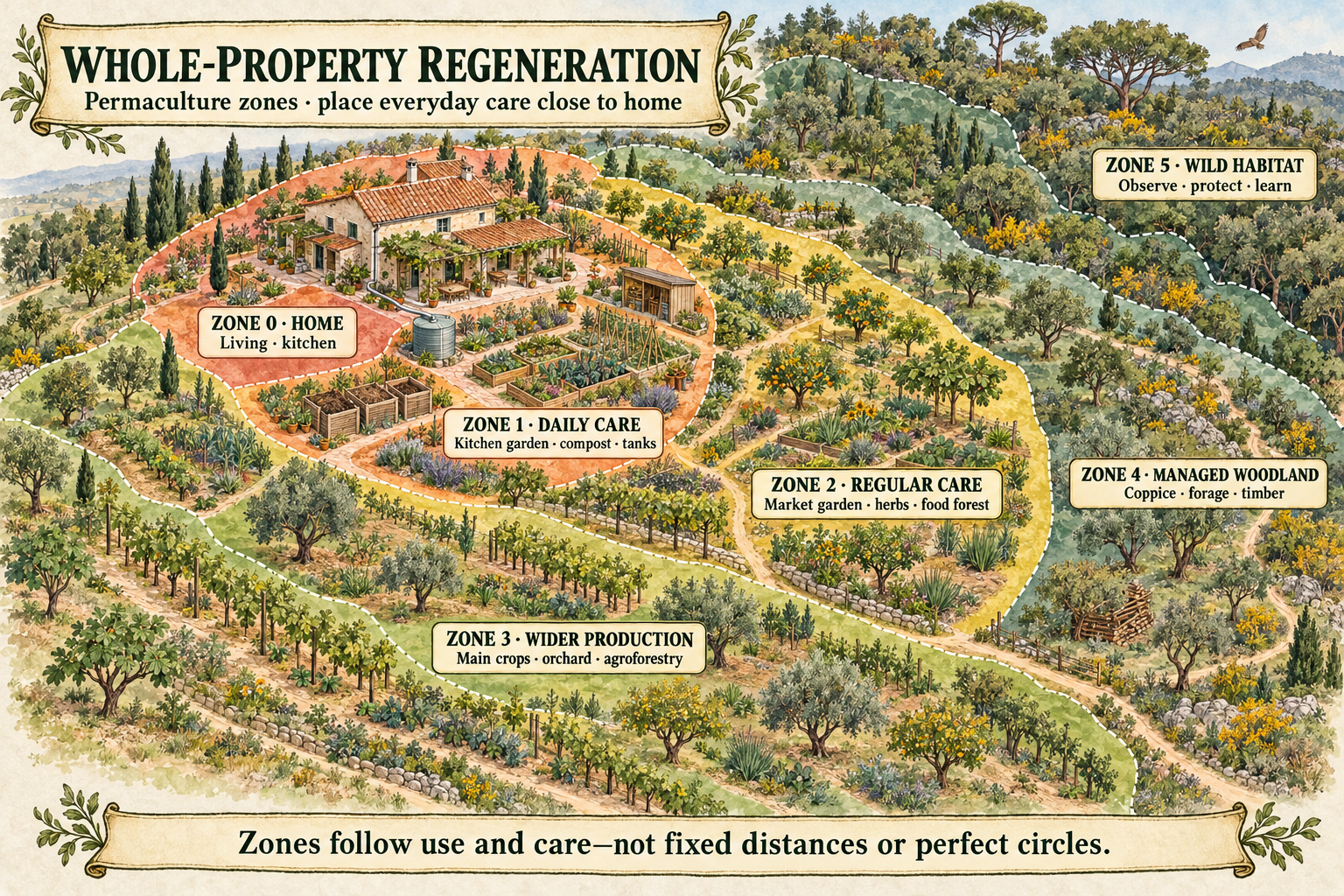
Sketch your home or daily starting point. Mark the places you visit every day, every week and only occasionally. Then draw where water arrives, flows and leaves.
Chapter one · The seed
Before asking what to plant, ask what you want your life to nourish.
Perhaps your heart hurts when you see degraded land, lonely communities or food systems that no longer feed life. Perhaps you are searching for resilience in changing times. Perhaps you simply remember that another way of living is possible.
A clear why grows deeper roots than motivation. It helps a small act - saving seeds, covering soil, sharing food - become part of a future you can feel and participate in.
Sit outside for ten minutes. Ask: What kind of world do I want my daily actions to feed? Write one sentence. Keep it somewhere visible.
Chapter two · The roots
Our wellbeing is inseparable from the wellbeing of the living world.
Healthy soil supports healthy plants. Healthy plants support insects, birds, animals and people. Communities flourish through trust, generosity and shared care. Our inner lives and our outer actions continuously shape one another.
Regeneration is not only restoring landscapes. It is restoring relationship: with ourselves, each other, food, water, soil, community and future generations. It asks not only, “How can this serve me?” but also, “How can my presence leave this place more alive?”
That question reaches into holistic living, conscious choices and leadership. For us, peaceful activism means turning care into practice: tending a neglected place, sharing useful knowledge, building bridges across differences and creating alternatives people can join. Oneness is a spiritual understanding we explore; the actions it inspires can be simple, visible and shared.
Choose one meal today. Pause before eating and name three relationships that made it possible: soil, water, seed, farmer, pollinator, cook, sun or rain.
Chapter three · Nature's pattern language
These are not rigid commandments. They are patterns we can observe in forests, gardens and communities - invitations to design with life instead of against it.
Flowers, herbs, fungi, insects, support species, food plants and trees make a living system stronger together.
Mulch is blanket, armour and food. Leaves, compost and chop-and-drop biomass protect the life below.
Read the slope. Protect catchments. Help rain enter the soil where it can recharge life and build resilience.
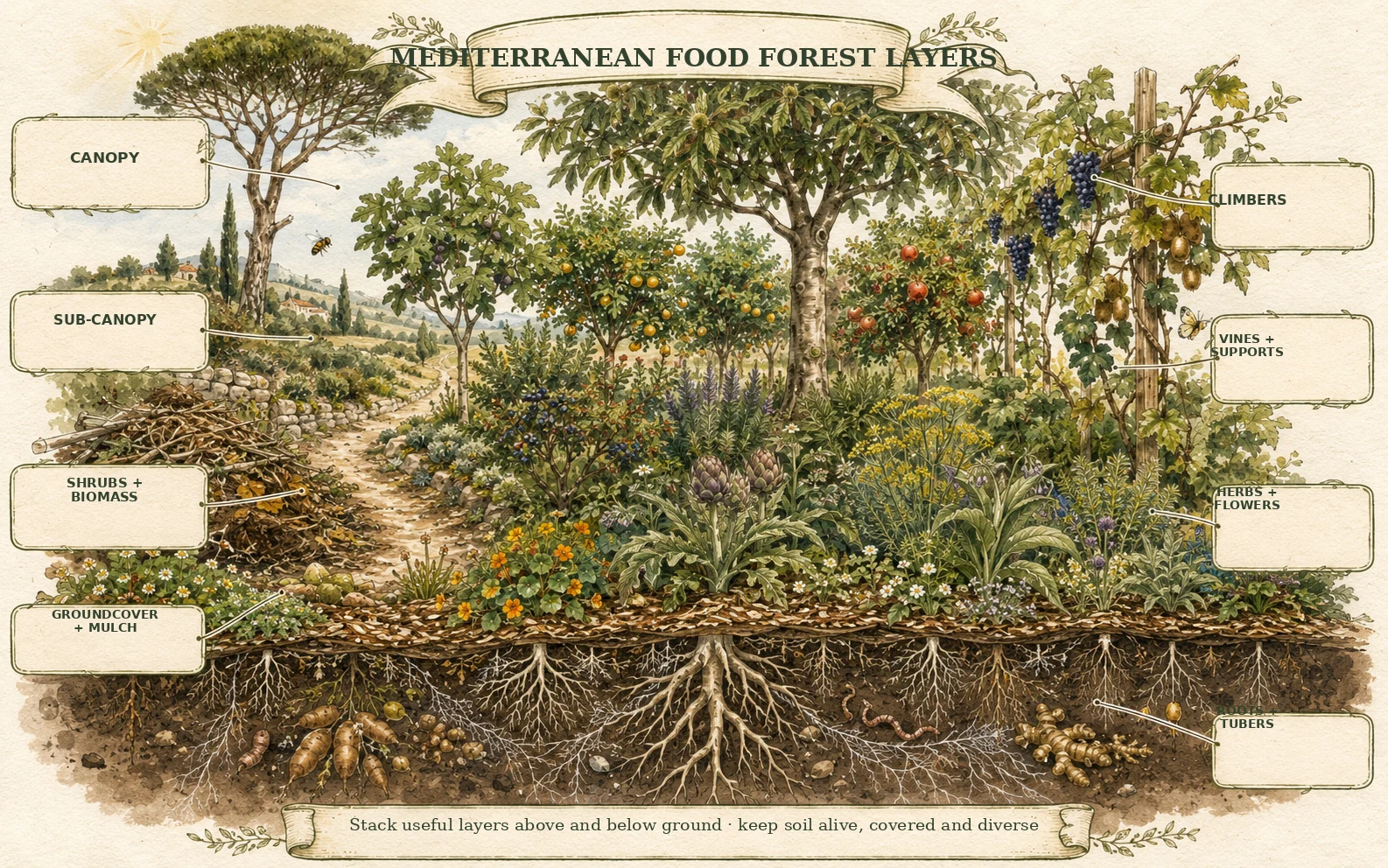
Canopy, understory, shrubs, herbs, roots, groundcovers, climbers and fungi share light, space and time.
Pioneers prepare the way. Fast species make biomass and shade. Long-lived plants inherit a richer future.
Sun, wind, water, soil, wildlife and human needs are already speaking. Good design begins by listening.
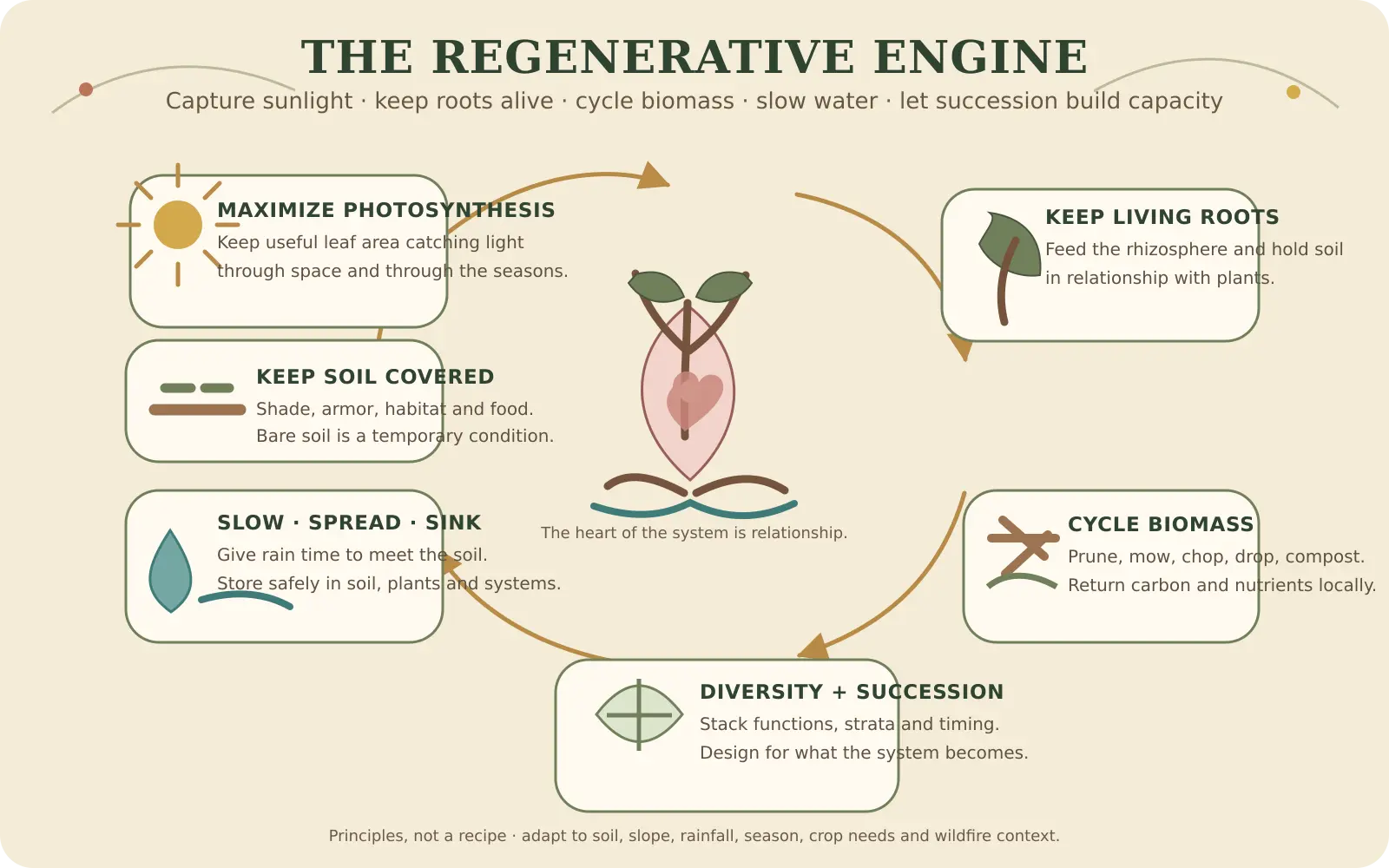
Read as a loop rather than a list: maximise photosynthesis so the system captures more energy; keep living roots so the soil is fed in relationship with plants; keep soil covered so bare ground becomes a temporary condition; cycle biomass by pruning, mowing and composting locally; slow, spread and sink water so rain has time to meet the soil; and grow diversity through succession so the system keeps building capacity.
These are principles, not a recipe. Adapt every one of them to your soil, slope, rainfall, season, crops and wildfire context.
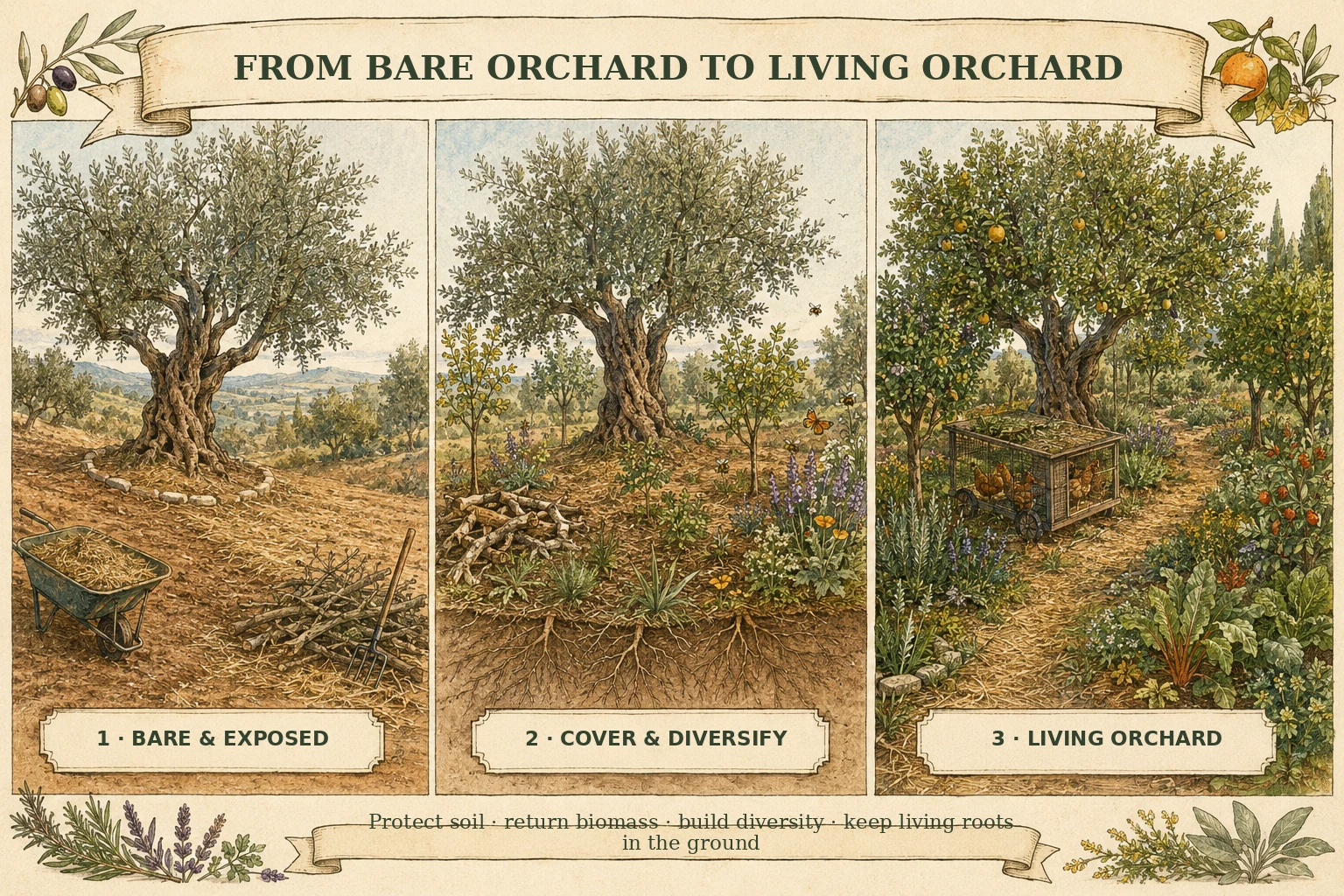
Illustrative regeneration principles · Every property requires site-specific assessment.
Walk slowly around your home or garden. Notice one place where water runs, one place where life gathers and one edge that could become more abundant.
Chapter four · The living ground
Soil is a living community - a breathing web of minerals, roots, fungi, bacteria, air, water and countless tiny beings.
Healthy soil holds water, cycles nutrients, stores carbon and supports resilient plants. The fastest first step is often not buying more products, but protecting the soil and feeding its biology.
Find one patch of bare soil and cover it with organic matter. Leave a little breathing space around plant stems.
Chapter five · Hands into life
You do not have to transform everything at once. A small, carefully tended corner can teach more than a grand plan made without relationship.
Where does water flow? Where is morning sun or harsh afternoon heat? What already thrives after rain?
Layer leaves, compost, safe woody material, green cuttings and mulch to begin building a living sponge.
Choose climate-suited herbs, flowers, groundcovers, support species, shrubs and trees that can help one another.
Choose a single square metre, container or tree circle. Photograph it, observe it and begin with soil cover today.
Chapter six · Where life gathers
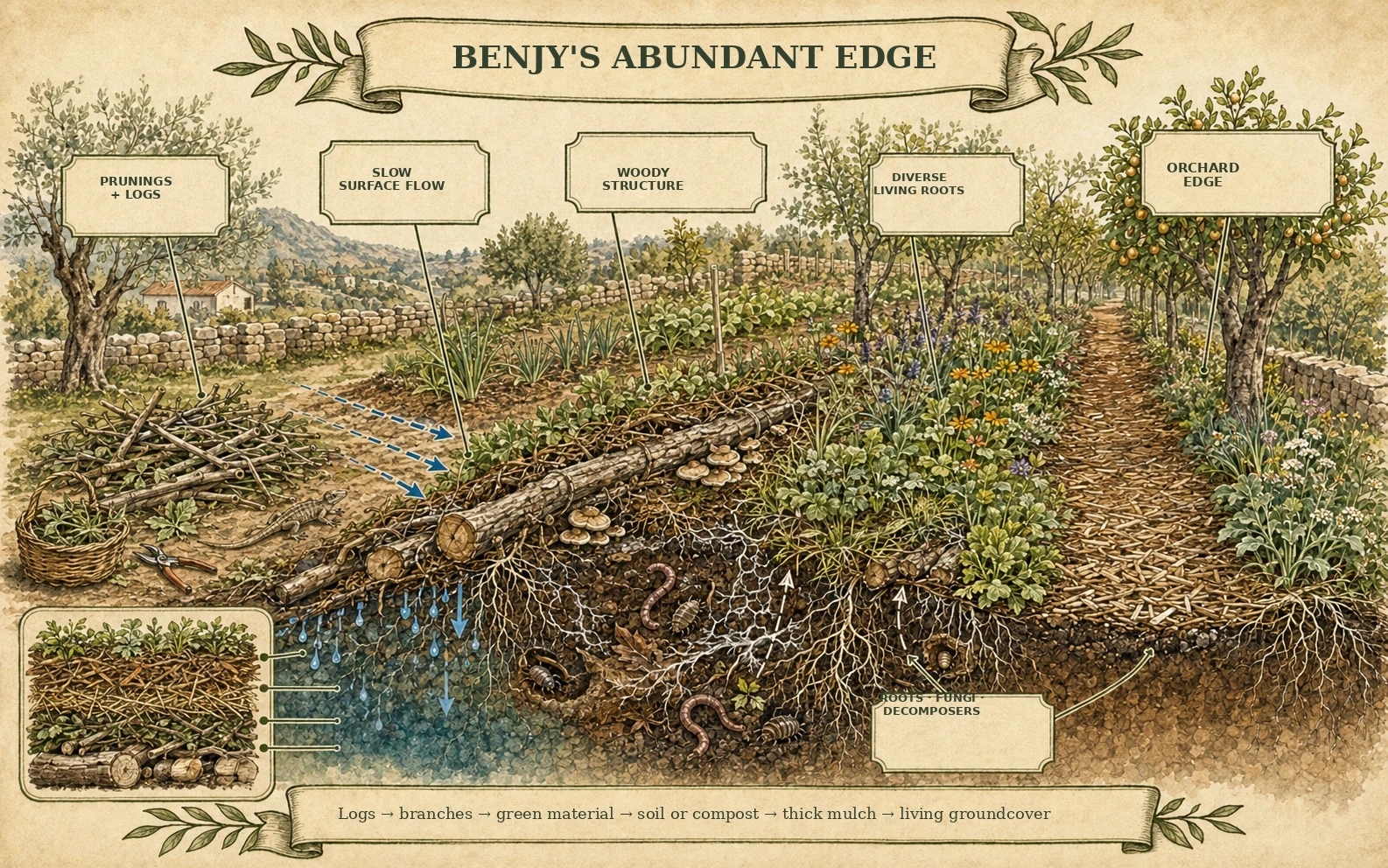
Edges are meeting places. Water slows. Roots overlap. Biomass collects. Fungi spread. Diversity increases.
Abundant Edge is Benjy's evolving pattern for creating fertile planting lines and tree connections with locally appropriate materials: woody matter, charged biochar where suitable, compost, green cuttings, mulch and carefully designed water-holding contours or raised edges.
The intention is to create a moist, biologically active sponge around plants so a young system can establish, connect and become more resilient.
Map one existing edge: a path, fence, contour, roof drip line or tree circle. Notice how water, wind, shade and organic matter behave there.
Illustrative regeneration principles · Every property requires site-specific assessment.
Chapter seven · Life tending toward life
Syntropy invites us to design with life's tendency to build increasing complexity, cooperation and abundance over time.
In syntropic agroforestry, plants are arranged through space and succession. Fast-growing species create biomass, shade and protection. Timely pruning stimulates growth and feeds the soil. Each phase prepares conditions for what can come next.
The lesson is larger than farming: a living system flourishes when each part can contribute to the greater whole.
Pair one fast-growing support species with a slower, long-lived plant suited to your climate. Imagine how future pruning can feed the soil.
Illustrative regeneration principles · Every property requires site-specific assessment.
Chapter eight · Belonging to place
Regeneration is not copying a tropical food forest everywhere. It is helping each landscape become more alive in its own character.
Mediterranean lands ask us to work with wet winters, dry summers, intense sun, fire and fragile water cycles. Shade, soil cover, organic matter, infiltration, wind protection and climate-suited diversity become essential.
During the next rain, watch where water comes from, where it speeds up, where it pools and where it leaves. Make notes before making changes.
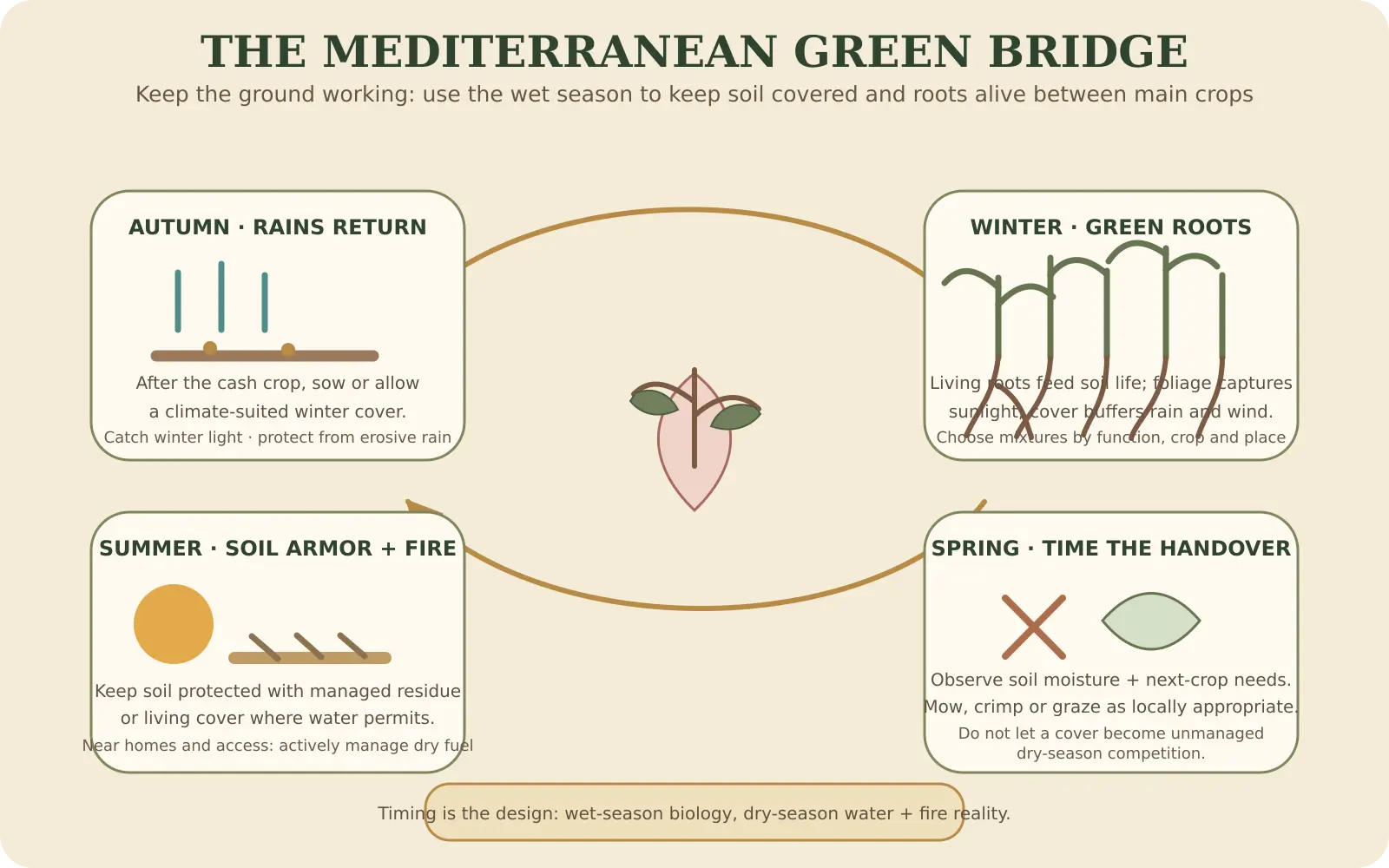
Mediterranean cover is a design decision, not a default. Choose species and timing for your rainfall, and weigh fire risk, water competition with established trees, and what the ground can support without irrigation. Staying green at any water cost is not regeneration.
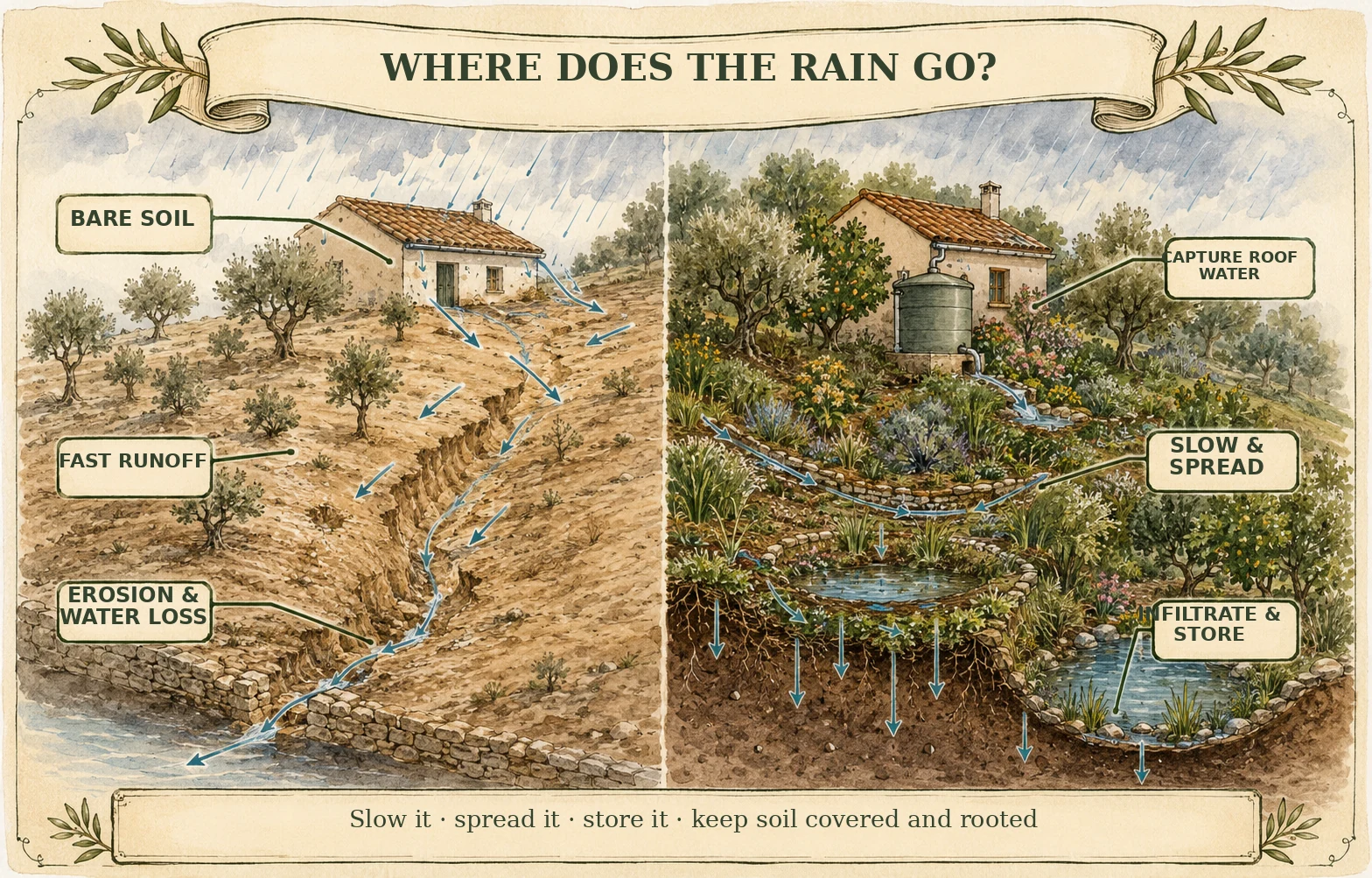
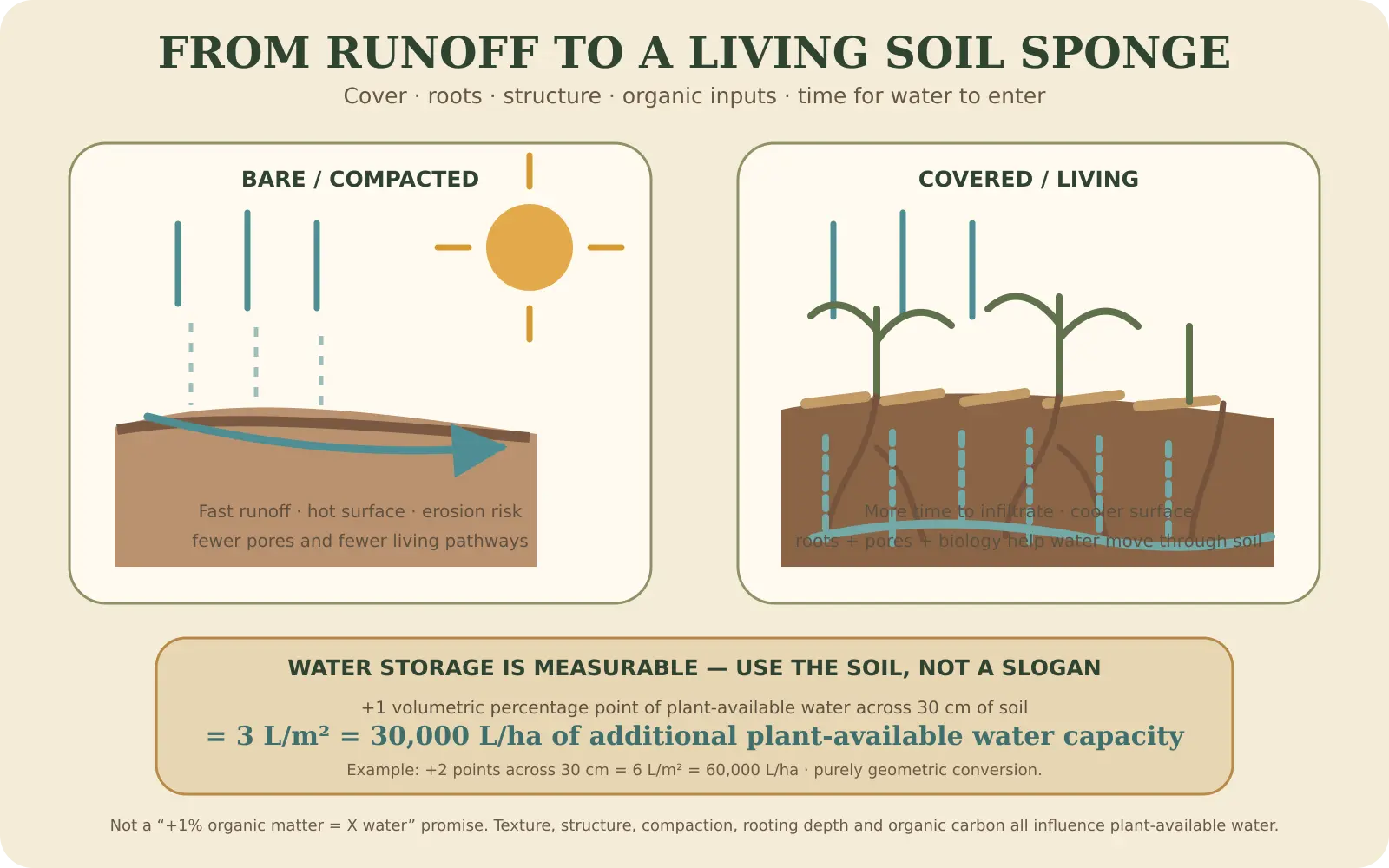
The arithmetic is worth stating carefully. If plant-available water rises by one volumetric percentage point across the top 30 cm of soil, that is about 3 litres per square metre, or roughly 30,000 litres per hectare. That is a real and useful gain.
It is not the same claim as “one per cent more organic matter stores 30,000 litres per hectare.” How soil water responds to carbon and organic matter is contextual, non-linear and depends heavily on soil texture, structure and depth. Treat the volumetric figure as arithmetic, and the organic-matter relationship as an open question to measure on your own ground.
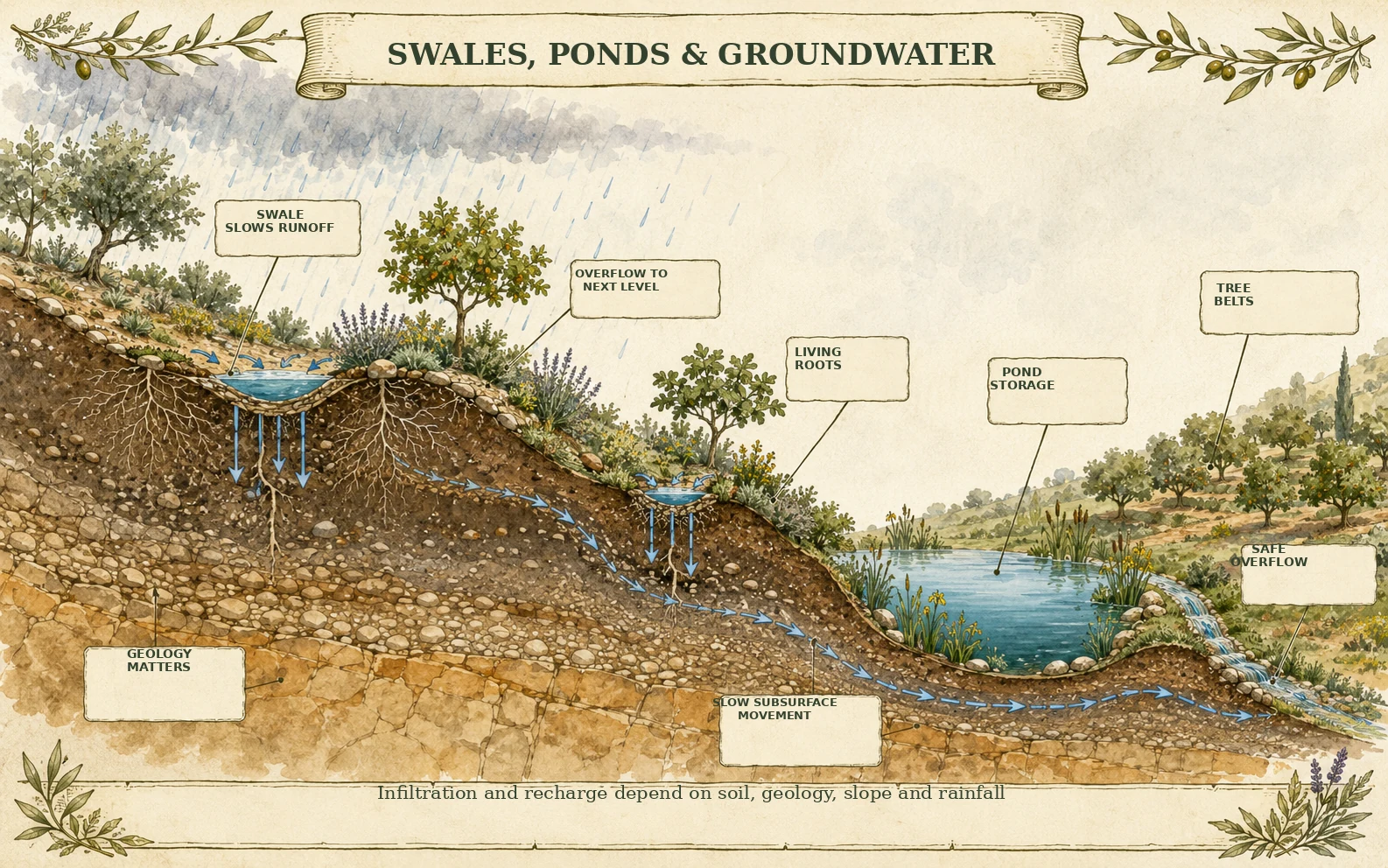
Illustrative regeneration principles · Every property requires site-specific assessment.
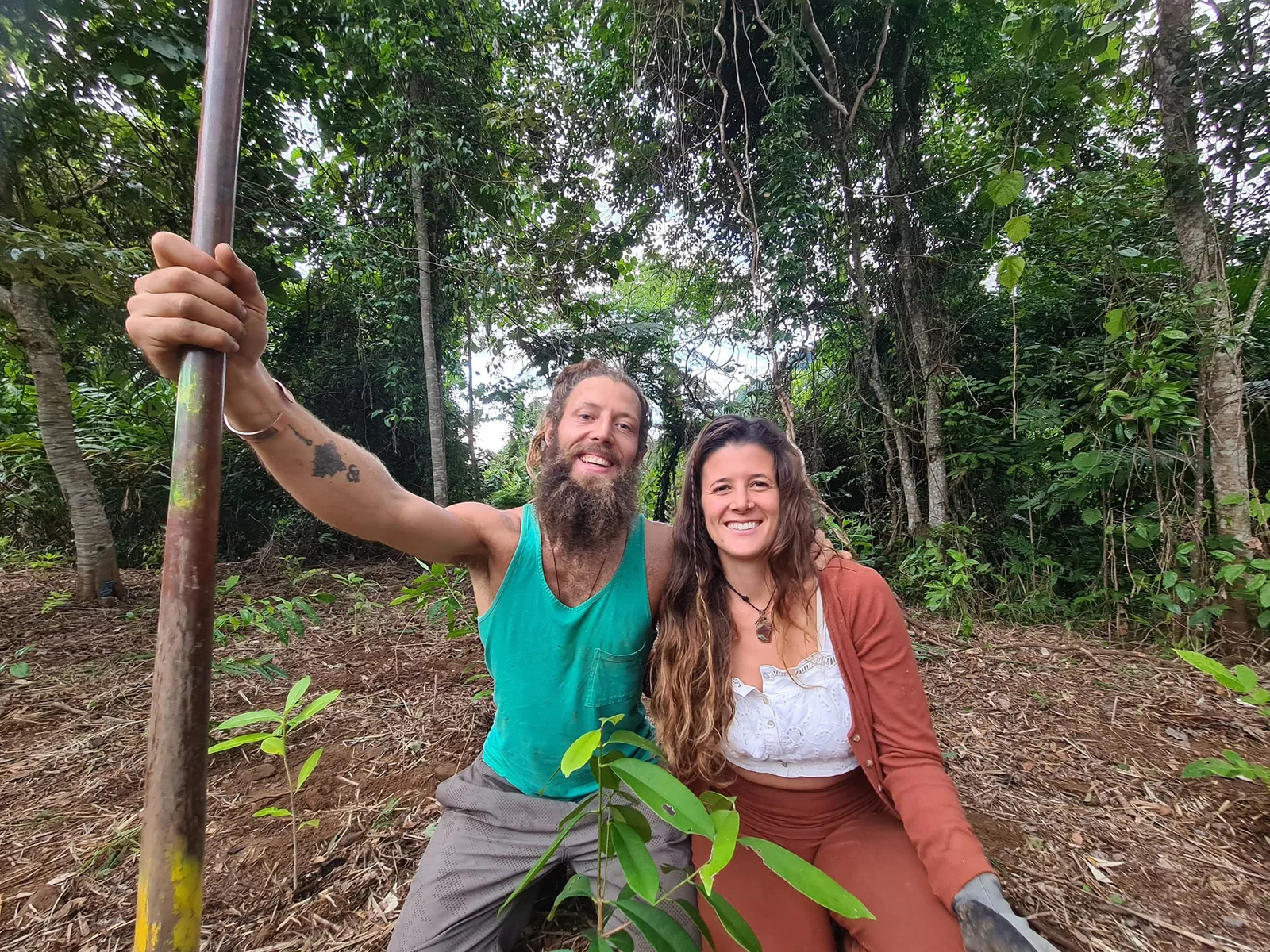
Gratitude and lineage
This companion lives within a much wider lineage: Indigenous land care, permaculture, syntropic agroforestry, regenerative agriculture, ecology, community practice and countless people learning directly from place.
Our heartfelt gratitude includes Gabu Damien of the Warrungu people in Far North Queensland; Bec Bop, Adam Collins and Watty; our PDC teachers and the Crystal Waters community; Jay Jackson, Analiese Horden, Brother Beans and Sustainable Barefoot Design; Charles Eisenstein; Sacred Earth tribe and foundation; the farmers, gardeners, retreat keepers, earth lovers and community leaders whose generosity continues to travel through us.
Names and teachings are shared with reverence, not as endorsements. Cultural knowledge belongs to its custodians. We will keep correcting, crediting and deepening this living page as permissions and details are confirmed.
Name someone, somewhere or something that taught you how to care. Thank them if you can. Let gratitude become reciprocity.

Before you go...
May your inner garden flourish. May the gardens you create nourish others. May we leave this Earth, together, a little more alive than we found it.
A living invitation
The smallest patch of earth you can reach is enough to begin a relationship.
Then bring it to the circle. We would genuinely love to see your square metre — the messy ones most of all.
There is no wrong way to do this. Muddy hands and honest questions are exactly right.