1
Stratum · The Ground Layer
Listen before you lift a tool
Sit with your land for one season if you can — or one slow afternoon if you can't. Watch where the morning sun lands and where the afternoon shadow falls. Notice where water runs, pools, and disappears. The "weeds" growing are messengers: pioneers arrive to heal exactly what the soil lacks. Read them, don't fight them.
This week: choose one spot. Sit there 15 minutes. Write what you see, smell, and feel. That spot becomes your conversation place.
2
Stratum · The Flow
Read your water — slow it, spread it, sink it
In dry Mediterranean land, water is everything. Every drop that runs off your slope is fertility leaving. Walk your land in the rain (or imagine it): follow the flow downhill. Your first earthwork is simple — a shallow mulch basin or a small swale on contour to catch and sink rain where the roots can drink it later.
This week: mark one low spot or contour line where water wants to gather. That's where your first tree or bed will be happiest.
3
Stratum · The Living Underworld
Feed the soil food web, not the plant
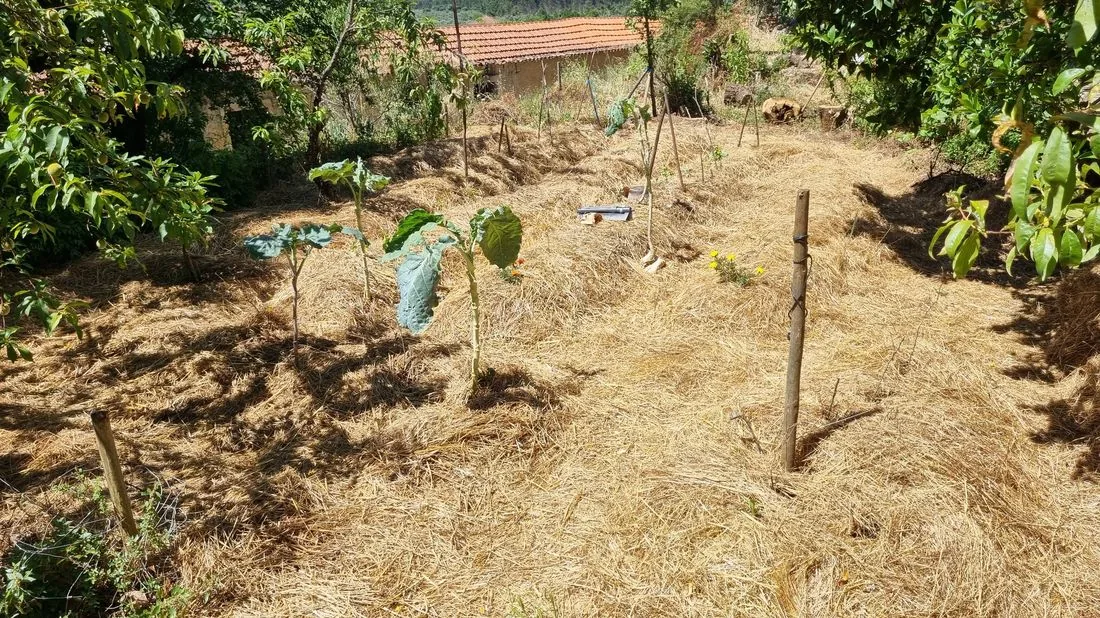
Never feed the plant — feed the festival of soil life beneath it, and it will feed everything. Stop tilling — tilling is killing. Never leave soil bare. Cover it with mulch, cuttings, cardboard, straw. Chop-and-drop whatever grows. Bring in compost, charged biochar, and forest IMO (indigenous micro-organisms) to wake the mycorrhizae — the underground internet that links root to root.
This week: cover one patch of bare earth. Anything. Bare soil is a wound; mulch is the bandage and the medicine.
4
Stratum · The Pioneers
Plant the support species first
Don't start with the fragile fruit tree. Start with the generous ones — fast nitrogen-fixers and biomass plants that build fertility, shade, and wind protection for everything to come: tagasaste (tree lucerne), pigeon pea, sunn hemp, tithonia, lupins, vetch, clover. These are the placenta species that nurse your future food forest into being, then become mulch.
This week: source one packet of a nitrogen-fixing or biomass seed suited to your climate. (Locally: Sementes Vivas.)
5
Stratum · The Abundant Edge
Build one living bed — dig once
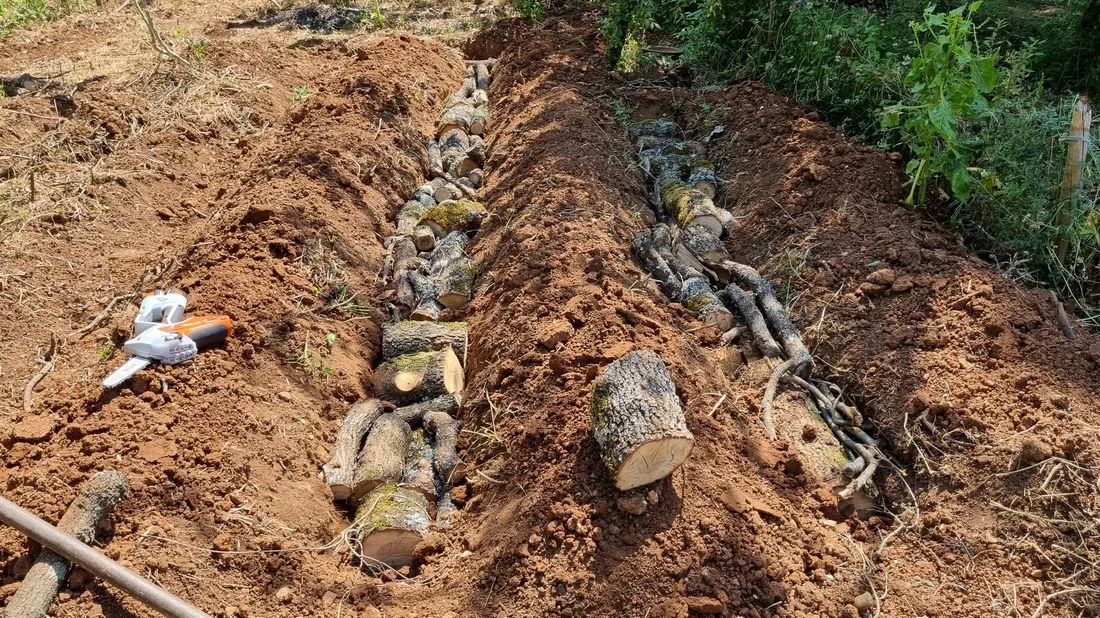
Our signature method. Dig once, then never again. Layer it like a forest floor: logs at the base (sponge + slow fertility), forest IMO and charged biochar, manure, green cuttings, the soil back on top, and a thick straw blanket to finish. One bed, built with love, will out-grow a whole tilled field — and teach you everything.
This week: mark out one bed, roughly 1–4 m². Begin gathering logs, cuttings, and mulch beside it.
6
Stratum · Sun & Moon
Plant with rhythm — light, cosmos, intention
Orient rows roughly south–north so light reaches all layers; use tall crops as living shade for tender ones. Then add the older rhythm: biodynamic moon planting — root days, leaf days, flower days, fruit days — and Steiner's preparations to enliven soil and compost. Hold the seed in your hand, breathe on it, speak your intention. Life responds to care.
This week: find one local biodynamic grower or a moon-planting calendar. Ask. Learn one rhythm. Bless your first seeds.
7
Stratum · The Canopy & the Heart
Tend with love — you are the mycelium
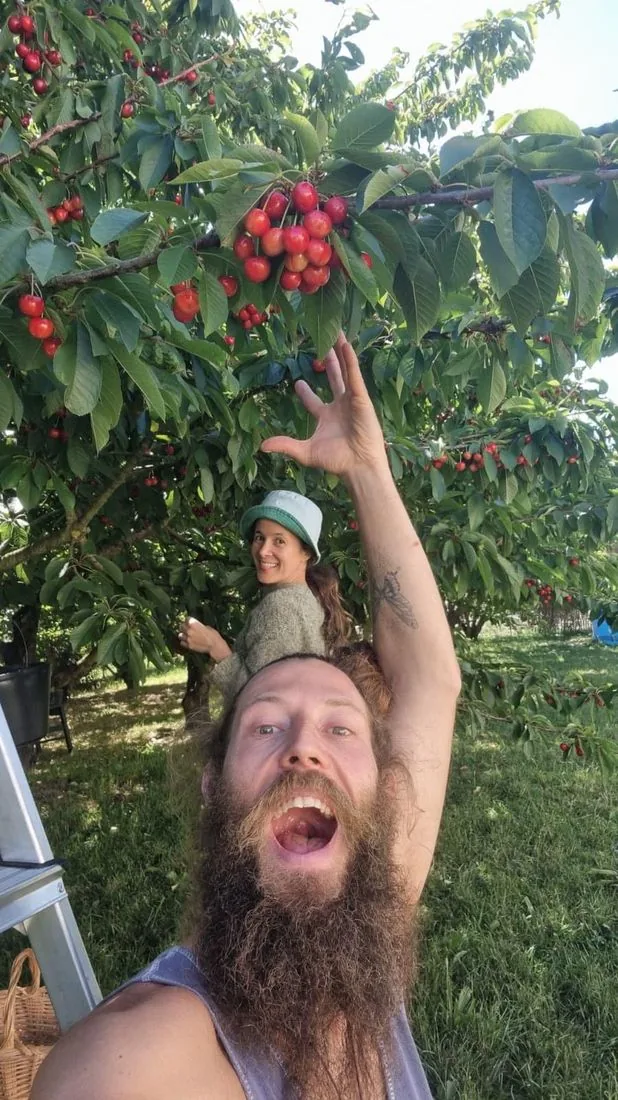
You are not managing the land. You are joining it — becoming part of the web, the hyphae carrying love into the field. Small, consistent care beats heroic bursts. Celebrate every shoot. Invite community; nothing thrives alone. Plant as if this soil will hold your family's love as living memory for generations — because it will.
This week: walk your land once with no task at all. Just gratitude. That is the most regenerative act of all.